Purpose-built for comic scripts: page structure, panel flow, dialogue, and artist handoff. Write for the page. Hand off with confidence.
Screenwriting apps think in scenes. Word thinks in paragraphs. Neither thinks in pages and panels.
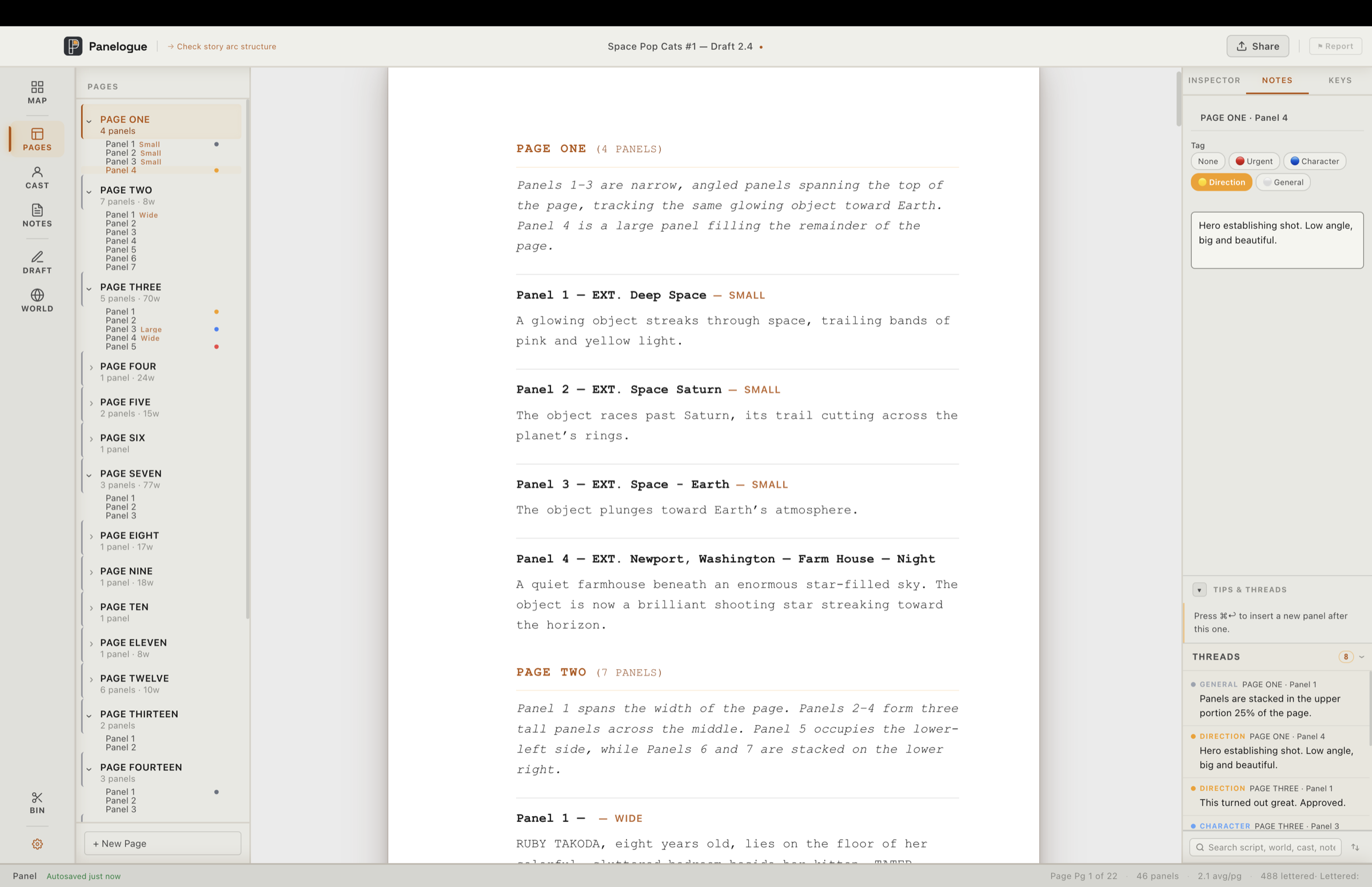
Issues, pages, panels, and spreads — the real units of a comic. Panels renumber themselves as you write.
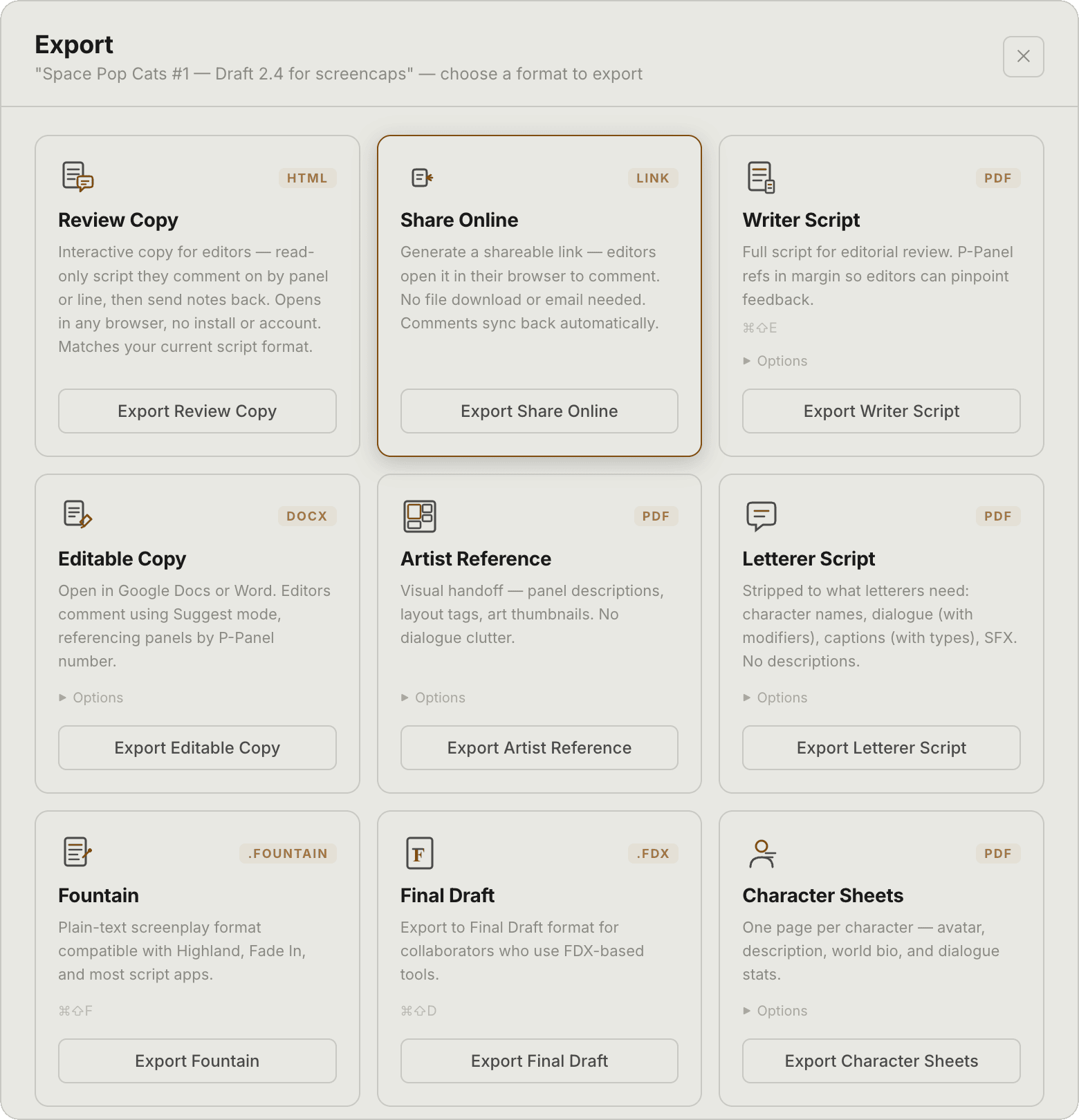
One script, tailored for every collaborator — a clean letterer PDF, an editable copy for the editor, and more.
Local-first on macOS and Windows. Your scripts stay yours. Always.
Send your script to an editor and pull their notes back in a single click — then keep writing.
One link turns your script into a review your editor marks up in any browser — no account, no install — and their notes flow straight back into your manuscript, pinned to the exact panels.
See how Editor Review worksAs you write a panel heading, the busywork takes care of itself. Scene types, locations, and times of day autocomplete as you type. Add a layout with / — splash, wide, bleed, double-page spread — kept as clean metadata your artist reads, never clutter in your script. And every panel and page renumbers itself the moment you add, cut, or reorder.
Every page is scored on the three things that actually break it: panel count, word load, and how many characters speak. Panelogue just shows you the facts — 9 panels · 287 words · 6 speakers — and flags the page Overloaded. It never tells you you’re wrong. It makes the load impossible to miss.
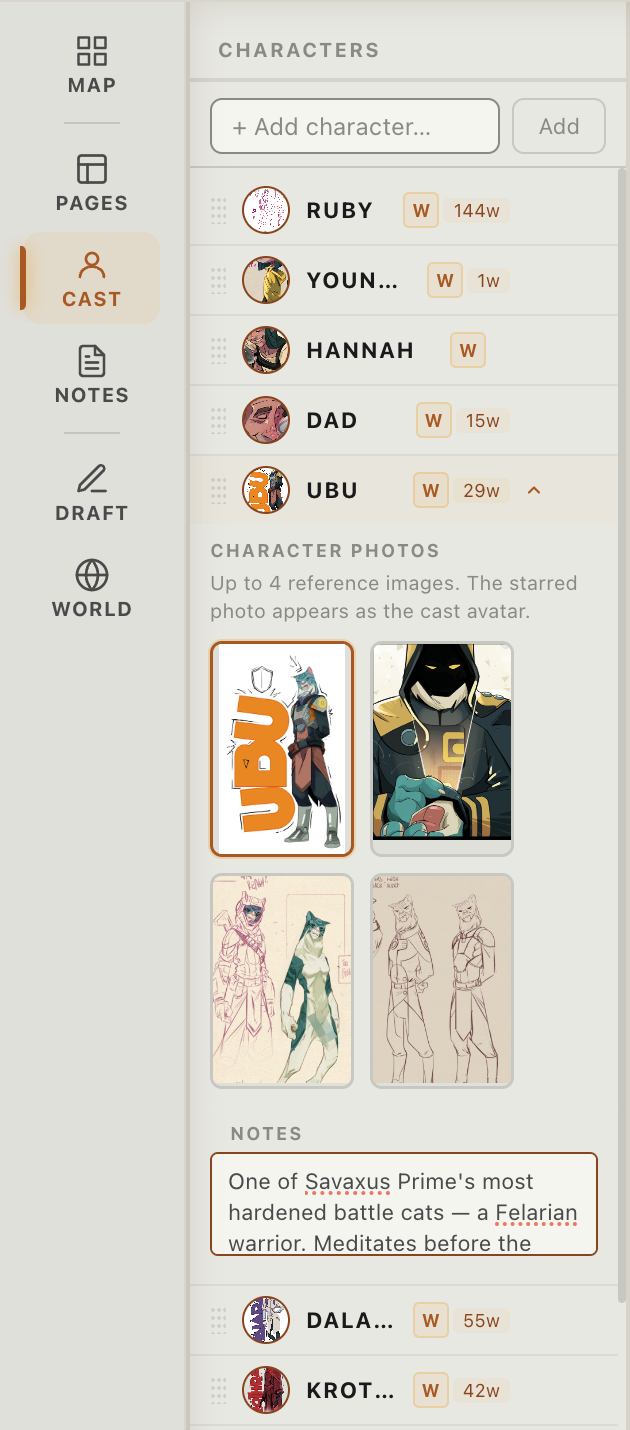
Type a character name in your script and Cast builds their entry on the spot. No forms, no imports, no setup. Just write, and your roster fills itself.
Locations, factions, lore, rules: structured and searchable, always one click away while you write. Not buried in a doc somewhere. Right here, in the same window.
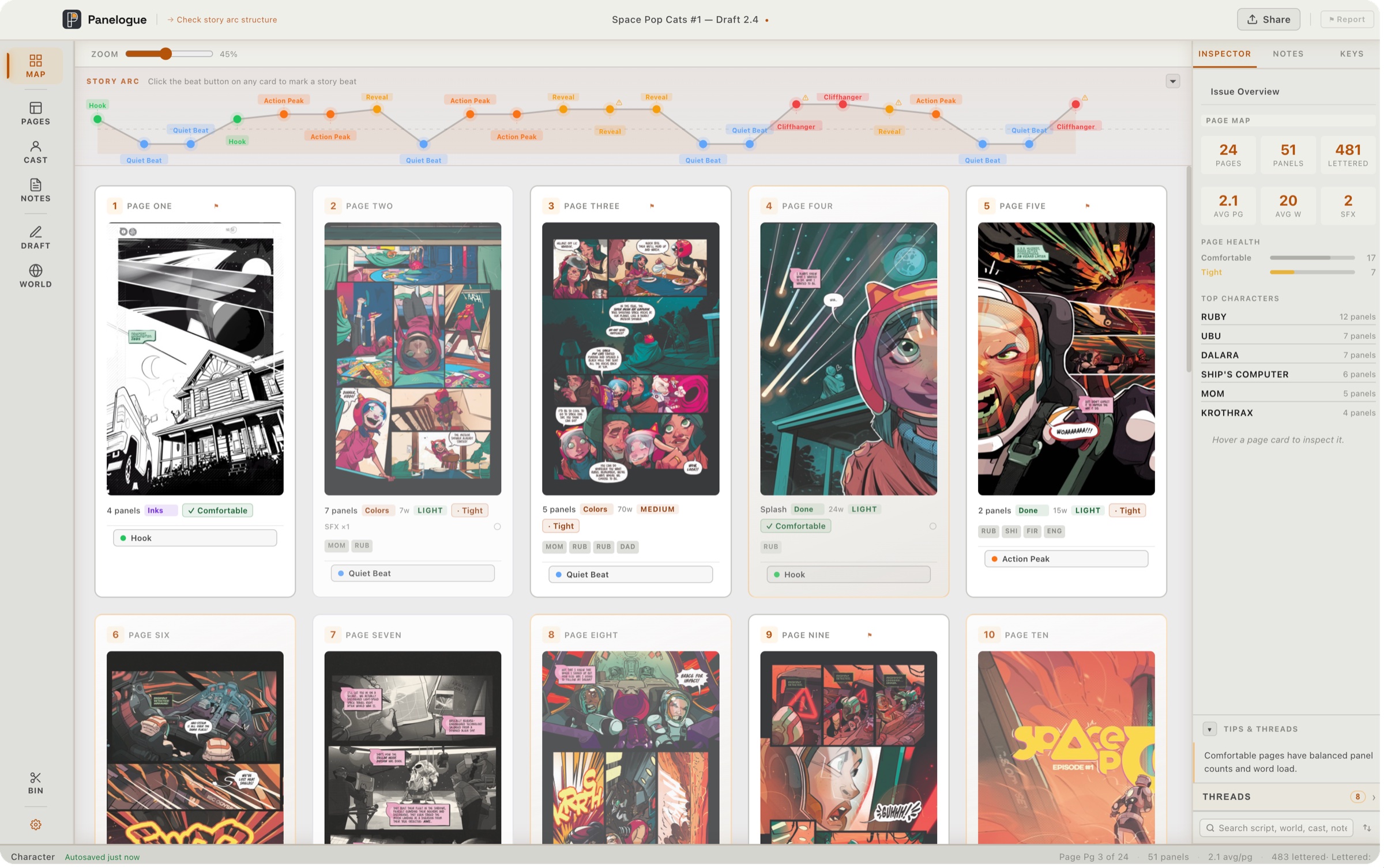
See every page at once. Spot the bloated act, the character who vanishes for twelve pages, the quiet beat in the wrong place, before your artist ever opens the file.
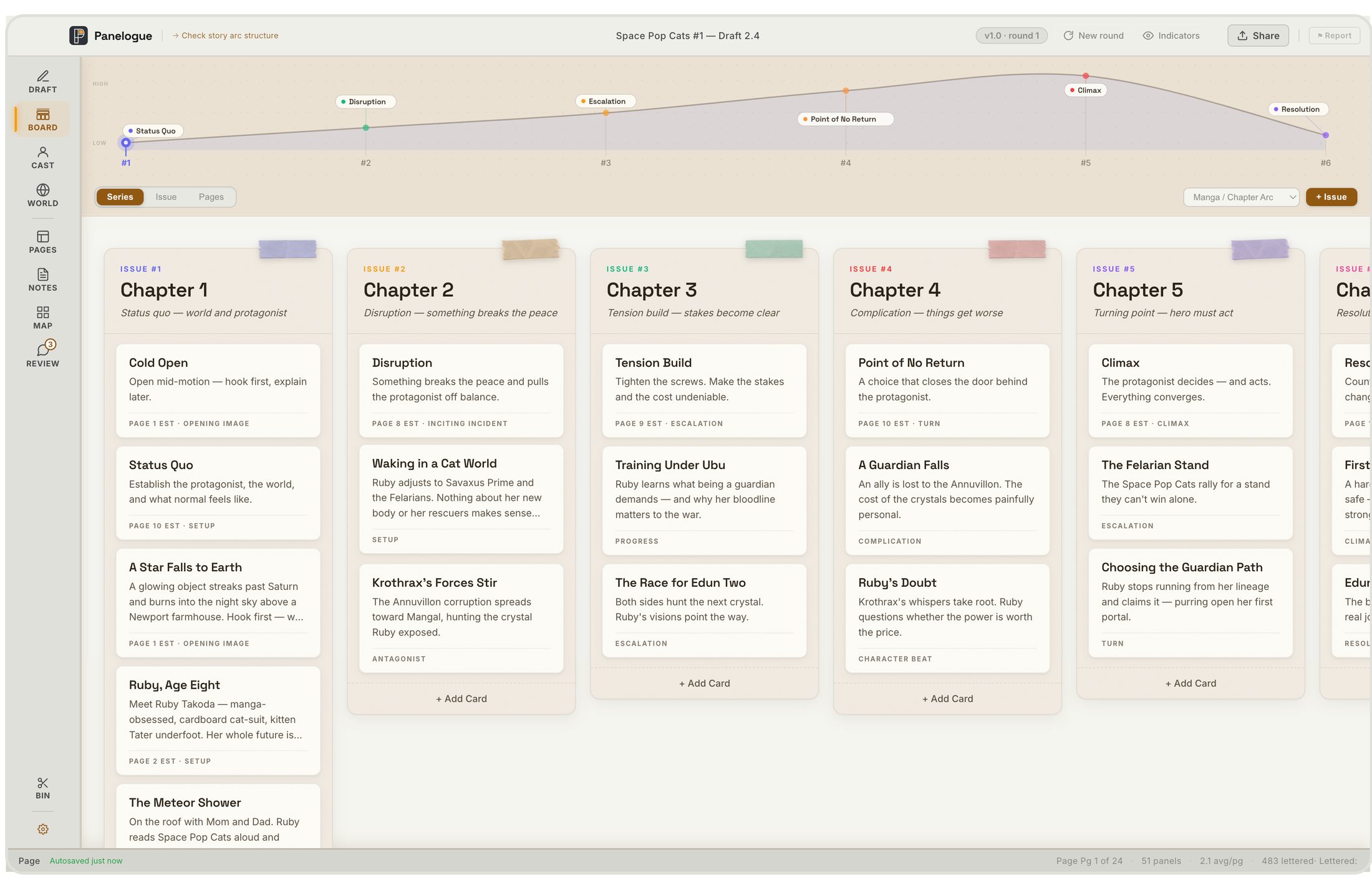
Break the issue into story beats and lay them out as cards. Panelogue links each beat to the script, so a card always shows its real page range, even after you rewrite and reorder. Plan the series, the issue, and the page from one board.
Tag every page with a beat: Hook, Quiet Beat, Action Peak, Reveal, Cliffhanger. Panelogue plots them as a tension curve, and fills it in automatically from your Story Board beats. See in one glance whether your third act has room to breathe, or your hook lands flat.
Tag notes for your artist, letterer, or editor. Each export delivers exactly what that person needs, nothing they don't. Pick a role to see what they get.
Full script for editorial review. Panel refs on every panel so editors can pinpoint feedback.
Open in Google Docs or Word. Editors comment in Suggest mode, referencing panels by number.
Visual handoff: panel descriptions, layout tags, and panel refs. No dialogue clutter.
Stripped to what letterers need: names, dialogue, captions, SFX. No descriptions.
Plain-text screenplay format compatible with Highland, Fade In, and most script apps.
Export to Final Draft format for collaborators who use FDX-based tools.
One page per character: photo, description, world bio, and dialogue stats.
Complete world-building document: all sections, entries, and notes in one reference.
Universal format: opens in Word, Pages, LibreOffice, and Google Docs.
Scene of Ruby and the crew fighting the ship.
And…I signed up with them. The only way I was getting to Mars and…now… were gonna crash.
The ship falls hard on the martian landscape and bounces. Two crew are sucked out of the hull and smash hard into preceding rocks. As the ship bounces and descends a second time, it careens through the top of a rocky outcrop, and ultimately slides to a stop. The ship is beyond repair. Ruby is broken but conscious.
Anomaly detected.
Anomaly detected.
GASP!
The ships computer warbles to a stop. Ruby stumbles through the bridge deck door, only to find there’s no more ship. Her crew is dead and her helmet is cracked and leaking O2.
Anomaly detected. Anommmm errrrrr.....error.
Ruby drags herself from the wreck. The twin moons rise over a sea of red dust.
We can break this up a bit — feels like there’s SFX in here that would be fun to play with?
Getting notes from an editor usually means export a PDF, email it, wait, dig comments out of a reply, re-export — again and again. Panelogue collapses that into one link. Your editor opens it in any browser — no install, no account — and marks it up right on the page, panel by panel and line by line, in a review view that works just like Panelogue. The moment they comment, their notes land back in your script, pinned to the exact panels — and they stay pinned even after you rewrite around them.
Bring your script with you and keep writing — pages, panels, dialogue, and structure intact. Nothing to rebuild.
Labels this page as PAGES N–(N+1) and counts it as two pages.
This is Space Pop Cats #1 living inside Panelogue, a full issue, structured, tracked, and ready to hand off.
No subscription. No account. Panelogue is local-first — a one-time purchase that lives on your machine and stays yours.
Early access opens in waves — join the waitlist to be invited first, at the founding price.
Early access opens in small waves — the waitlist is invited first, at the founding price. The price rises at public launch.
Repeat dialogue.